
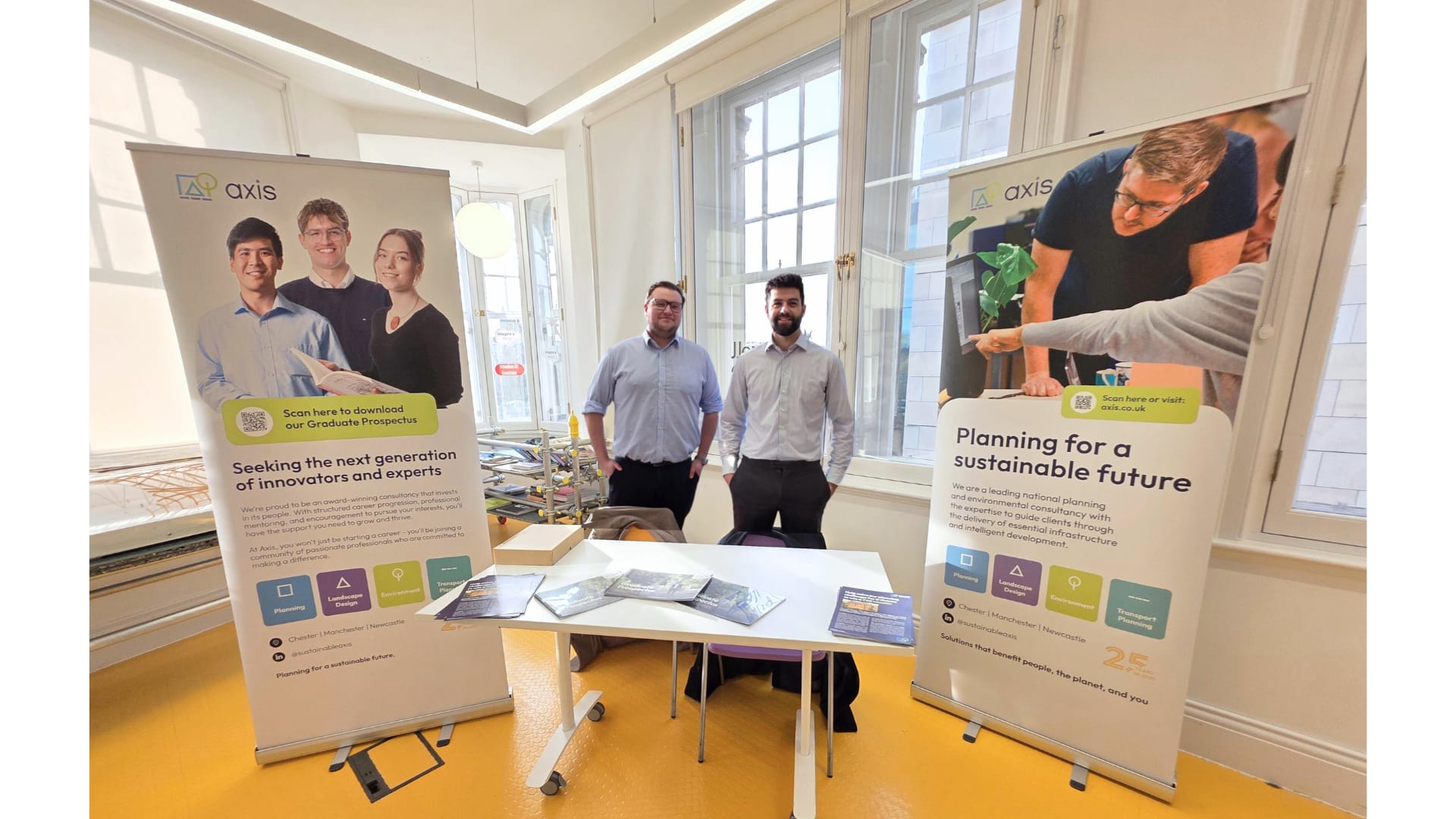
Axis recently returned to Newcastle University for its Architecture, Planning & Landscape Autumn Careers Fair – and this time we brought a genuine planning challenge with us.
Students were invited to step into the shoes of a planning consultant and consider a question that reflects the complexity of planning in practice:
How do you secure a sustainable future for a historic property within a conservation area, while ensuring the scheme remains financially viable? View the full planning challenge here>

The challenge was based on a live project being led by Tom Hutchinson, Senior Planning Consultant in our Newcastle office. Tom recently prepared and submitted a planning application to vary an approved consent to improve the viability position and unlock successful delivery. The project involves navigating the kind of competing priorities planners face every day:
• heritage sensitivity
• landscape and design considerations
• viability constraints / project delivery
Celebrating student creativity
We received a range of thoughtful and imaginative submissions, reflecting a strong understanding of how planning decisions must balance both sensitivity and practicality.
Congratulations to our winner: Sandeep Kute (MSc Urban Planning Student)
Sandeep’s proposals particularly stood out given their explicit reference to enabling development and the ability for this to be used as a mechanism to cross-subsidise the identified conservation deficit related to the Halls conversion / re-use. As a bonus point, Sandeep also made reference to the removal of detrimental ad-hoc poorly considered additions (extensions associated with the buildings previous use), to better reveal its historic character.
Axis would like to thank all students who took part in the challenge and visited our stand. It was great to meet so many engaged future planners and to see such enthusiasm for the profession.
About the project: Whorlton Hall
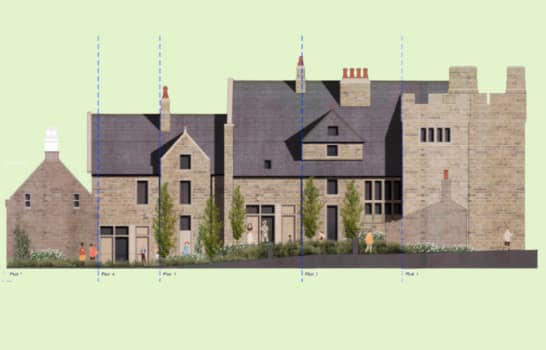
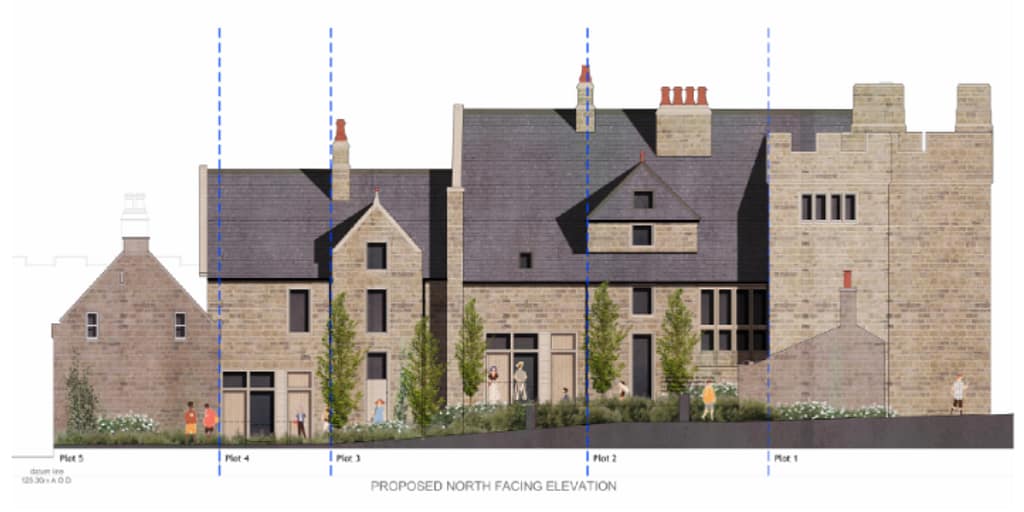
The challenge was inspired by an existing project at Whorlton Hall, a non-designated heritage asset located within Whorlton Conservation Area in County Durham.
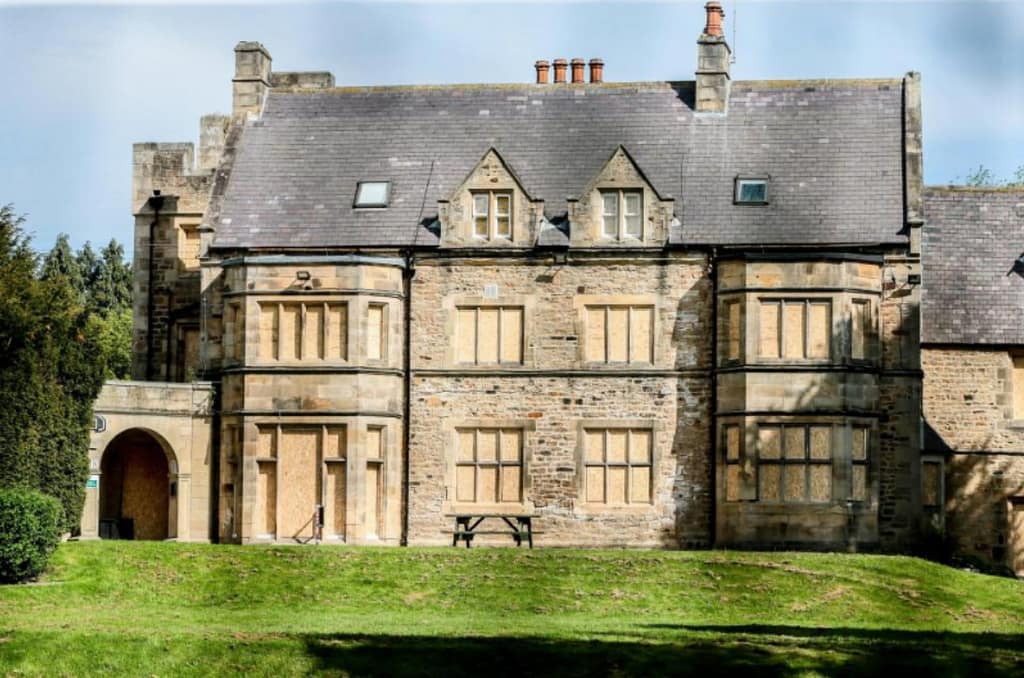
Despite its strong historic value, the Hall has stood vacant for many years, gradually detracting from the character of the surrounding village. A significant obstacle to its restoration is the conservation deficit – the cost of repair and conversion far exceeds the building’s market value.
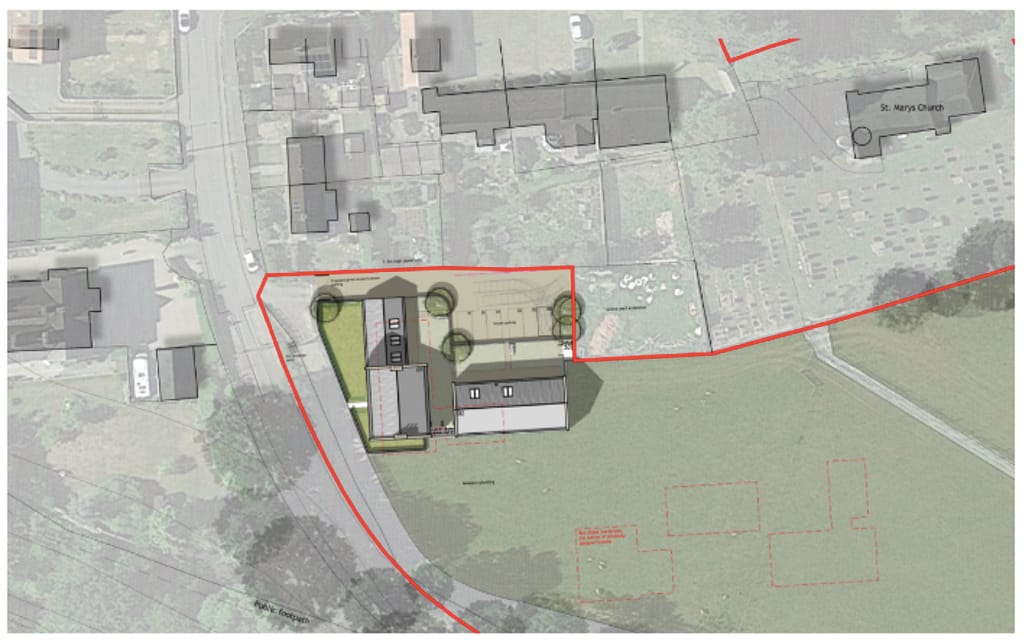
To overcome this challenge, the scheme uses a well-established planning approach known as ‘enabling development’.
What is enabling development?
Enabling development allows for new development, where appropriate, to fund the conservation of heritage assets.
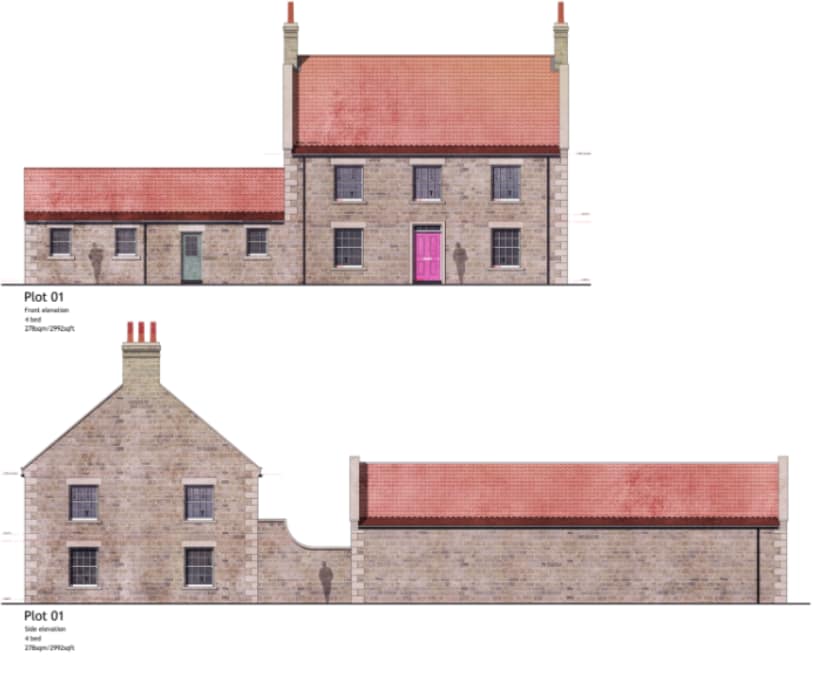
For Whorlton Hall, this takes the form of two sensitively designed and high-quality new homes on adjacent land. These dwellings are not simply additional development, they are the financial mechanism that makes the Hall’s restoration viable.
This approach ensures that:
• the minimum development necessary is proposed
• heritage and landscape impacts are carefully assessed
• long-term public benefits are delivered through the Hall’s restoration and re-use
With crucial support from other specialist consultants, including POD Newcastle Architects, the project aims to secure the future of Whorlton Hall while enhancing the character of the conservation area.
A valuable learning experience
“The planning challenge gave students a genuine insight into the realities of decision-making in sensitive locations. Their responses showed real potential and touched on many of the issues we navigate daily on behalf of clients…
We’re excited to continue our engagement with Newcastle University and to support the next generation of planners as they shape their own career journeys.” Tom Hutchinson, Senior Planning Consultant at Axis
If you’re a student interested in a role at Axis, why not check out our Careers information> and our Graduate Prospectus>